Why, oh why?
|
Why do woodpeckers hammer on homes?
Because they can. Seriously, here's why woodpeckers and other cavity nesters peck on your home.
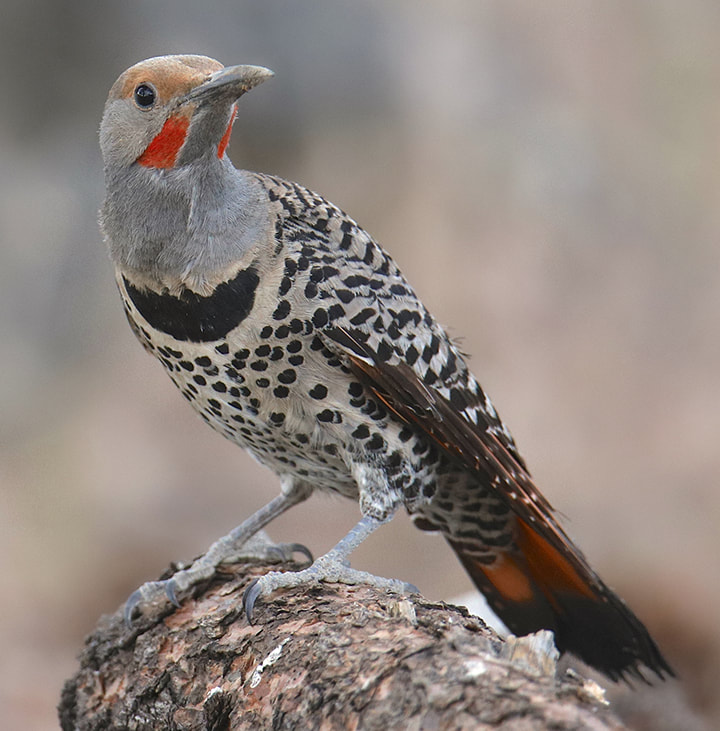
Woodpeckers can frustrate us, but these protected birds indicate a healthy forest and mitigate insect damage in our trees. Northern Flickers are a keystone species and provide cavities for all sorts of other animals, including owls, ducks, chickadees, and other animals like weasels. |
Woodpecker Nest FACTS
Many commercial solutions for woodpeckers don't work or harm the bird.
- It is not kind or legal to harm woodpeckers.
- Prevention is key, using physical solutions.
- Once a nest with eggs or babies is established, it is illegal to interfere in any way.
- Removing a tree or limb with an active nest (eggs or babies) is illegal and kills babies.
- Moving a nest more than 2 feet away will lead to abandonment of the cavity.
- A legally permitted bird rescuer can move the nest
- Moving the nest must result in parents coming to the new location and feeding.
- A woodpecker nest can be cut out of a tree or limb and replaced somewhere else on that tree. Leave the trunk of the tree, and wire the cavity onto the trunk.
Exclusion - Prevention
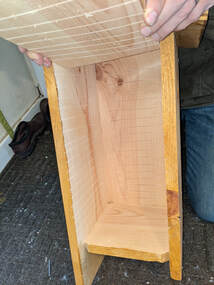
Woodpecker Boxes prevent damage and benefit the bird.
- Prevent home damage by offering the birds an alternative - their own cavity!
- Boxes must have grooves every 1/2" inch horizontal on all inside walls to allow babies to perch on the sides.
- Boxes without grooves result in feather damage and hunger for the smallest bird stuck on the bottom.
Prevention
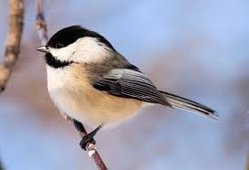 Other cavity nesters may find your house appealing too.
REPAINT OR STAIN THE HOME- birds pecking on the home can mean insects and insect damage.
Exclusion after damage
Cover hole with a nestbox for that species.
- Simply placing a box over the location of pecking can stop the bird.
- Boxes provide homes for summer and winter
- Use the correct box for the species
Cover hole with HARDWARE CLOTH - Exclusion - AFTER BABIES HAVE Fledged
- MAKE SURE THERE are NO BIRDs/BABIES IN A HOLE prior to covering!
- Hardware cloth is a metal mesh.
- Staple either directly on the damaged area,
- Or place at an angle to enclose the entire area.
- Paint to match house with a metal-grade paint.
- Make sure the bird cannot get behind the mesh!
SHEETMETAL - Glue or tack down over holes or areas birds are interested in. Paint to match. Bend around trim
BOX THE AREA IN -
- Enclose gable ends or put box around - a woodpecker wants to be UNDER the eaves, protected. Eliminate that option. Never leave a space over a beam open or vent holes without screen.
MYLAR STRIPS (OR OTHER SHINY THINGS) -
- Tack up shiny Mylar strips every few inches across eaves. Tack down bottoms or add weight to keep down by adding duct tape. Holographic wind socks also work.
HANGING UP ANYTHING works, if you put enough of it -
- PARACORD OR ROPE: BirdSavers.com has a nice professionally produced product. "Scary Eyes" balloon; Holographic stringers, yard art items like pin wheels, be creative. Netting is less noticeable.
WINDOW SOLUTIONS - many of these solutions work for woodpeckers too.
Drumming
- Paint metal caps, ridgelines with Rubberizing paint (talk to the Hardware store).
- Glue or attach burlap to wood or other non-flammable surfaces.
- Provide alternative drumming sites.
- Tolerance - get up when they do.
WANT MORE INFORMATION?
- Never use sticky glues or other substances - they kill birds because they cannot get it off.
- Living with Wildlife by the Washington DFW - one of the THE best sources of information out there.
- Cornell Labs - Woodpecker deterrents
- www.birdsavers.com - offers all sorts of solutions
- BirdBGone.com - some handy solutions & commercial solutions (careful some harm birds). The holes of their netting are too large.